

Unlocking Legacy Logic for the Modern Era
For decades, PICK-based systems have quietly powered operations at thousands of companies, from auto dealers to finance to logistics. These legacy platforms, built on multidimensional data models and often customized in Pick/BASIC or its many variants, remain critical to daily business functions—but they’re increasingly difficult to support.
The developers who understand these systems are retiring. Documentation is scarce. And modernization is daunting due to the entangled nature of legacy business logic.
This article explores how AI is being taught to understand Pick code, why the challenge is unlike anything in conventional software modernization. This article offers insight to this challenge, for C-level decision makers.
The Challenge: Legacy Code That Thinks Differently
Pick systems don’t operate like modern relational databases or mainstream programming languages. Instead, they rely on:
- Multivalue and subvalue structures stored in what looks like a single record,
- Implicit logic and deeply nested conditionals in Pick/BASIC,
- Terminal-based UI code entangled with business rules,
- Dynamic compilation and dictionaries that defy static analysis,
- And often, no formal version control or documentation history.
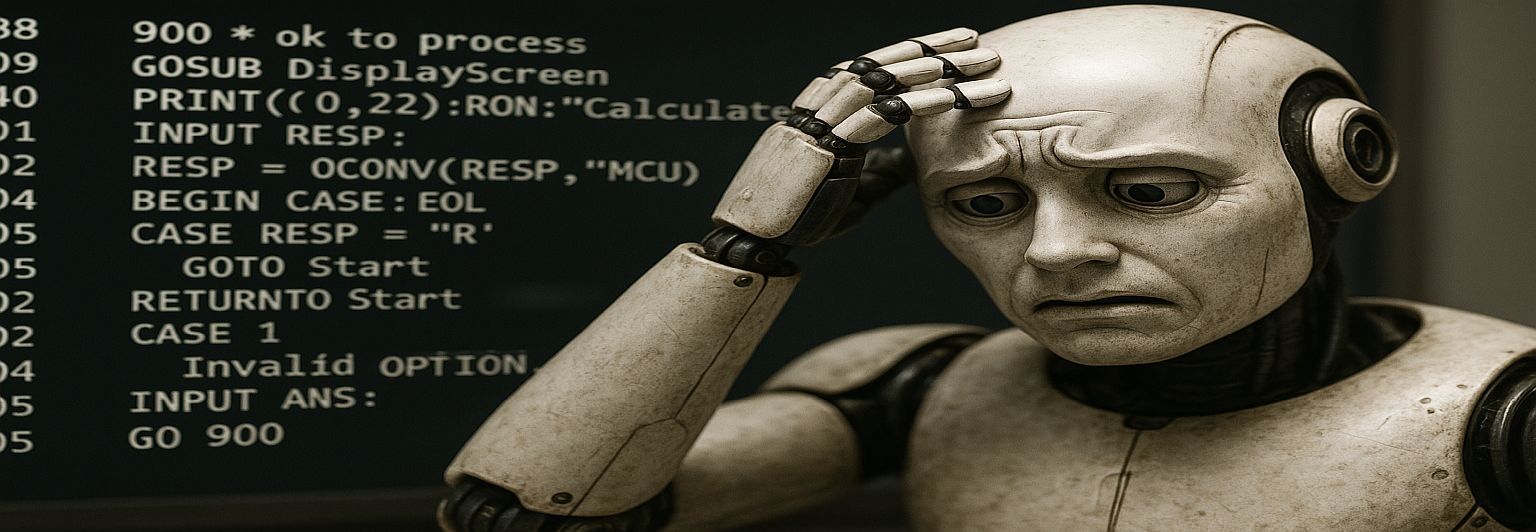
Traditional AI models trained on JavaScript, Python, or SQL fail to grasp the contextual and structural quirks of Pick code. Applying standard large language models (LLMs) to Pick simply produces noise.
Why AI Needed to Be Retrained
BinaryStar realized early that to modernize Pick systems at scale, the AI itself needed to learn how Pick thinks. You can’t just dump a Pick program into a transformer model and expect useful results.
Instead, BinaryStar developed MYRA with a novel approach: a segmented, structured, and sanitized ingestion process that breaks Pick systems into AI-comprehensible units—prior to involving machine learning.
“We don’t just teach AI what Pick code looks like. We teach it how Pick thinks, and where the boundaries are between logic, data, and human interaction.”
— Lee Bacall, Founder, BinaryStar Systems
The MYRA Advantage: How It Works
At the heart of the MYRA system is a proprietary technology stack that isolates and transforms legacy code before it reaches the AI. Here’s how it works:
1. Ingestion and Sanitization
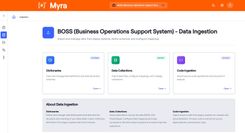
- MYRA begins by parsing raw Pick source code, stripping out UI prompts, terminal-specific control codes, and user interface elements.
- The code is broken down into logical segments, not just line-by-line, but grouped by intent—such as validation logic, dictionary access, data manipulation, and output formatting.
2. Contextual Tokenization
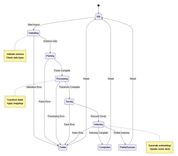
- Rather than treating code as text, MYRA applies domain-specific tokenization, marking functional elements (e.g., READ, WRITE, GOSUB, LOCATE) with metadata about their roles.
- Dictionary elements are mapped to corresponding data rows using Pick's internal AMC (attribute map codes).
3. Isolation of Business Logic
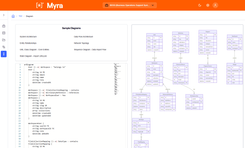
Business rules are extracted and represented in a normalized form, with user interaction abstracted away
enabling the AI to focus on "what the system does" rather than "how the system says it"
4. Model Training and Reasoning
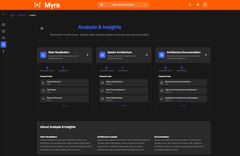
- The segmented and tokenized output is then fed into a specialized LLM model fine-tuned by BinaryStar with examples from actual enterprise Pick systems.
- MYRA leverages reinforcement learning based on real-world outcomes: its results are verified against operational data to refine interpretations and improve accuracy.
Final Thought: AI Is Ready. Are You?
The hardest part of legacy transformation is not the technology—it’s the fear. Fear of losing control, breaking what works, or betting on the wrong horse.
But AI has changed the game.
With MYRA, BinaryStar has given C-level leaders a way to understand their systems, reduce risk, and plan confidently for the future.
The buried treasure in your Pick code can finally be extracted—logically, securely, and quickly.
It’s time to teach your systems a new language—one the future understands.
Next Step:
🗓️ Schedule a discovery call
Talk about issues and opportunities for your current system before you commit.