


How Technology Transformed Our Publishing Workflow
In today’s hyper-competitive environment, speed matters — especially when it comes to delivering fresh, high-quality content to your audience. What once took our teams six weeks to prepare, approve, and publish can now go live in under sixty minutes. That’s not a typo: sixty minutes.
This dramatic shift didn’t happen by magic. It’s the result of an intentional investment in modern design tools, AI-assisted content migration, and a smarter approach to publishing. By rethinking our technology stack and empowering our writers, we’ve created a system that takes the friction out of publishing. Here’s how we made it happen — and how your organization might do the same.
The Bottleneck: A Legacy Content Process
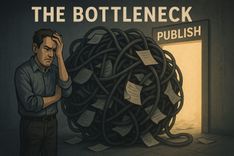
For many organizations, the content publishing process is tangled in legacy workflows. Multiple rounds of approvals, outdated content management systems, inflexible design processes, and technical bottlenecks often leave great ideas languishing in a queue for months before they see the light of day.
In our case, the old process was laborious. Writers drafted articles in Word documents, then handed them off to a web team. Designers would style the copy, developers would build templates, QA testers would check for formatting or broken links, and only then — after sign-off from editorial and legal — could an article go live.
All of that added up. An average publishing cycle spanned as long as six months, stifling our ability to react to breaking trends or market news.
We knew there had to be a better way.
Design at the Speed of Figma

The first step was modernizing the design process. Instead of hard-coded page layouts, we adopted Figma, a powerful, collaborative interface design tool.
Figma allowed our design team to create reusable page templates with consistent styles and layouts. It also supported design systems, so colors, fonts, buttons, and reusable blocks could be standardized across the publication.
Because Figma is web-based and collaborative, designers, editors, and other stakeholders could review page designs simultaneously. Comments, changes, and approvals could happen in real time, eliminating endless rounds of emailed screenshots or static PDFs.
In effect, Figma gave us a living blueprint for our website and its articles, drastically reducing the handoffs between designers and developers.
Leveraging AI to Migrate Content

Once the design was modernized, the next challenge was migrating hundreds of articles — and creating a future-friendly workflow for new ones.
We turned to artificial intelligence to do the heavy lifting. An AI pipeline was trained to read our existing content — usually stored in Word or PDF documents — and convert it into Markdown format. Markdown is a lightweight markup language that supports headings, subheadings, bullet lists, tables, links, and other elements in a simple, human-readable syntax.
This shift was a game-changer. Markdown is incredibly easy to edit and can be seamlessly ingested by modern content management systems like Strapi, which became the backbone of our publishing operation.
By automating the conversion, the AI eliminated hours (or sometimes days) of reformatting. Writers no longer had to re-paste text or worry about HTML errors; their articles were instantly press-ready.
Strapi as a Modern CMS
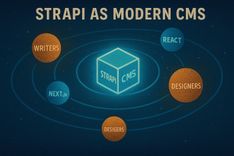
With content in Markdown, we needed a fast, flexible place to store and serve it. That’s where Strapi came in.
Strapi is a headless content management system. Unlike traditional CMS platforms, it decouples the content layer from the front-end website. Writers and editors can create, edit, and publish content in Strapi, while the front end — a React or Next.js website, for example — pulls data directly from Strapi’s APIs.
This “headless” architecture means:
- No more page reloads for editing or previewing
- Easy scaling across different devices and platforms
- Freedom to redesign the front end without disrupting the editorial workflow
The result? Content creators work only in Strapi, focusing on their message, while developers maintain the front end separately. That separation of concerns has made it dramatically easier to maintain, update, and scale our web presence.
Empowering Writers, Eliminating Technical Bottlenecks

One of the biggest wins from this transformation is how it has empowered our writers.
Before, writers had to rely on developers and web specialists to get a story online. They worried about styling, formatting, and even whether the website team had time to schedule the story.
Today, they write directly in Markdown — a format simple enough that most journalists can learn it in under an hour — and deliver the copy to Strapi. They can preview exactly how it will look, fix any last-minute issues, and press “publish” themselves.
There is no more middleman. No more tickets in the developer queue. No more waiting for a web team to build a new page.
Instead, the subject matter experts — the people closest to the story — are in full control of their publishing schedule.
Press-Ready Media with No Compromise
We were also determined not to compromise on quality. In many traditional workflows, speed improvements come at the expense of visual polish or editorial oversight.
With our Figma-based design system, everything is reusable and consistent. Markdown preserves structure (headings, lists, emphasis) without breaking layouts. And Strapi provides a robust preview function, allowing editors to check the final version before hitting publish.
This means the final product is as polished as something that took months to produce — but delivered in a fraction of the time.
Writers can even embed rich media (images, videos, charts) directly in Markdown. They no longer need a web developer to place images, adjust padding, or fix a responsive layout.
Clarifying the Timeline Improvements
Let’s break down exactly how we achieved this dramatic time savings. In the past, moving from a Figma design to a live article involved multiple complex steps:
Figma to React Template (4–6 Weeks) Initially, taking a design from Figma and translating it into a functional React component required four to six weeks of intensive engineering effort. Teams had to manually reconstruct styles, proportions, typography, and layout fidelity to match the original design pixel by pixel. That included developing reusable components, verifying breakpoints, testing for responsive behavior, and aligning the React framework with the intended brand experience.
Streamlining with AI and MYRA (Hours Instead of Weeks)
With modern AI tools and the MYRA automation framework, much of the “grunt work” — cutting and pasting props, assigning data bindings, mapping typography rules — has been eliminated. The AI automatically extracts component structure, styles, and interactions from Figma and maps them to React components, reducing the React template build from 4–6 weeks to just a few hours of review and refinement.Integrating with Strapi
Once the React template is prepared, engineering still needs to wire it up to Strapi’s headless CMS, ensuring the content pipeline (headlines, body text, images, metadata, etc.) flows cleanly between Strapi’s content types and the React components. This connection guarantees that editors and writers can preview exactly how the final article will appear on the live site.Rapid Content Publishing
With the completed framework in place, content creators simply paste their Markdown content, headlines, teasers, images, and any interactive controls directly into Strapi. They can then press the PUBLISH button — and within seconds, their article is live and accessible from any device or browser, anywhere in the world.
In short, what once required months of handoffs and rounds of engineering review now takes minutes, giving the team full control, lower costs, and a faster route to market.
Time and Cost Benefits
Moving from a six-month publishing cycle to sixty minutes is more than a productivity boost — it’s a strategic advantage.
- Lower labor costs. Web specialists no longer spend hours converting documents, checking formatting, or fixing broken HTML.
- Reduced opportunity costs. Fresh stories can be published on the same day they’re written, keeping your brand relevant and responsive.
- Better employee experience. Writers feel empowered, engaged, and more in control. Designers can focus on creative innovation instead of endless rounds of approvals.
- Scalability. As your content needs grow, adding more writers no longer overloads the development team.
What used to take an entire cross-functional team of designers, developers, editors, and project managers now takes a single writer and an editor. The savings are measurable, but the cultural impact is just as profound.
A Repeatable Model

One of the best parts of this transformation is that it can be replicated. Nearly any organization with a blog or a knowledge hub can benefit from the same approach.
Here’s a simple high-level roadmap:
- Adopt a design system in Figma (or a similar tool) to standardize your layouts and branding.
- Convert legacy articles to Markdown, using AI-assisted conversion if you have a large back catalog.
- Migrate to a headless CMS like Strapi to separate the content from your front-end website.
- Train your writers to use Markdown, empowering them to publish independently.
- Build a developer-friendly front end (React, Next.js, etc.) that pulls from your CMS via API.
- Document your process so future team members can pick up where you leave off.
The technical investment is modest, but the return is enormous.
Lessons Learned
Every technology transition comes with lessons. Here are a few of ours:
✅ Train your writers thoroughly in Markdown. Even if it’s easy, a consistent style guide helps maintain quality.
✅ Test, test, test your migration pipeline with older documents. We found inconsistencies that needed a human check before going live.
✅ Collaborate across roles. Designers, editors, and developers should agree on standards early, especially for reusable design tokens and templates.
✅ Invest in preview tools. Giving writers a “what you see is what you get” view in Strapi prevented surprises after publishing.
The technology is ready — and so are your readers.
The Big Picture
In the end, this transformation wasn’t just about tools or process. It was about control — giving control back to the people who create the stories.
By removing technical bottlenecks and automating the tedious parts of content production, we freed up our creative teams to do what they do best: tell compelling stories that matter.
From Figma design systems, to AI-driven content conversion, to a modern headless CMS, the pieces of the puzzle came together to create a publishing workflow that is not only faster, but better — higher quality, more sustainable, and scalable for the future.
We went from a glacial six-month timeline to sixty minutes, and you can, too. If your organization struggles with long content approval cycles, it might be time to look at how modern tools can empower your people, save your budget, and keep your brand competitive.
Continuing the publishing story
👉 HowTo: Publish web content in an hour or less
Next Step:
🗓️ Schedule a discovery call
Talk about issues and opportunities for your current system before you commit.